
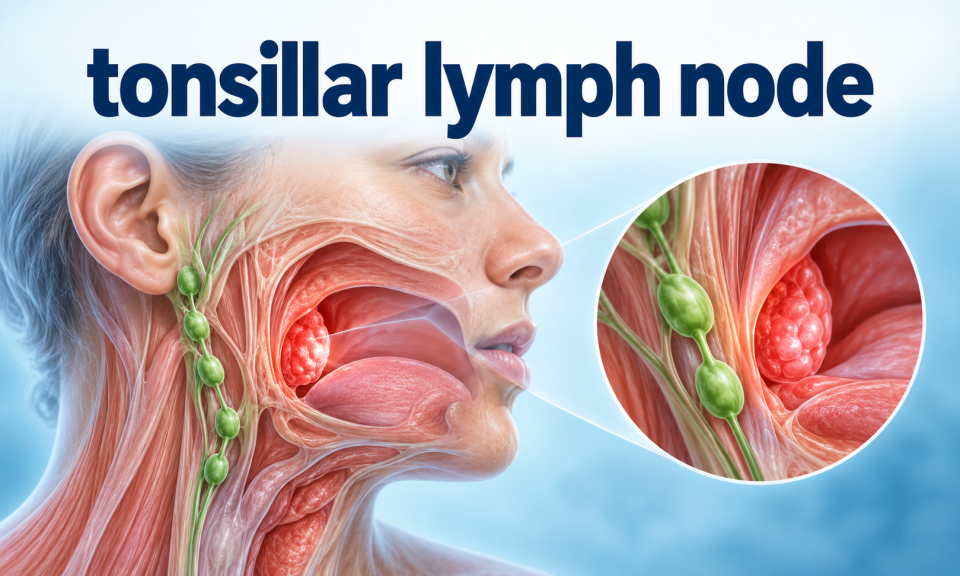
The tonsillar lymph node is a term often used for an upper deep cervical lymph node near the angle of the jaw, commonly corresponding to the jugulodigastric node. It helps drain lymph from structures in the throat, including the tonsillar region, which is why it can become enlarged during tonsillitis, strep throat, viral infections, dental infections, and other nearby inflammation.
Most swollen lymph nodes in this area are reactive and temporary, especially when they occur with a sore throat or recent infection. However, a persistent or progressively enlarging neck node deserves medical evaluation because the tonsils are part of the oropharynx, an area where cancer can also occur. tonsil cancer describes enlarged neck lymph nodes as one possible sign when tonsillar cancer spreads to nearby lymphatic tissue.
Where Is the Tonsillar Lymph Node Located?
The lymph node commonly referred to as the tonsillar node lies in the upper neck near the angle of the mandible, close to the internal jugular vein and the posterior belly of the digastric muscle. Clinically, it is usually associated with the jugulodigastric node, one of the upper deep cervical lymph nodes.
This location explains why a person may feel a tender lump just below or behind the jaw when they have an infection involving the tonsils or throat. The node is not part of the tonsil itself. It is a lymph node in the neck that receives lymphatic drainage from nearby head and neck structures.
What Does the Tonsillar Lymph Node Drain?
Lymph nodes act as filters for lymphatic fluid and contain immune cells that help recognize infections and abnormal cells. The upper deep cervical chain receives drainage from the pharynx, palate, tongue, and other head and neck structures.
The tonsillar region drains primarily toward upper deep cervical nodes. This is why inflammation or cancer in the tonsil can sometimes produce a noticeable lump in the neck before the person notices a large change inside the throat.
| Possible Cause | Typical Clues | Usual Next Step |
| Viral throat infection | Sore throat, congestion, cough, fever, tender nodes | Supportive care and monitoring unless symptoms are severe |
| Strep throat or bacterial tonsillitis | Sore throat, fever, painful swallowing, swollen tonsils, tender neck nodes | Medical testing and antibiotics if bacterial infection is confirmed |
| Dental or gum infection | Tooth pain, gum swelling, bad taste, facial tenderness | Dental evaluation |
| Mononucleosis | Marked fatigue, sore throat, enlarged tonsils, multiple swollen nodes | Medical evaluation and activity guidance |
| Tonsil or oropharyngeal cancer | Persistent one-sided node, lasting sore throat, swallowing pain, ear pain, weight loss | Prompt ENT or medical assessment |
Why Can This Lymph Node Become Swollen?
The most common reason is infection. When immune cells inside the node respond to bacteria or viruses draining from the throat, the node can enlarge and become tender. A reactive node may feel soft or rubbery and may be painful when pressed.
Swelling can occur with common colds, influenza, COVID-19, tonsillitis, strep throat, infectious mononucleosis, dental infections, and other inflammatory conditions. In many cases, the node becomes smaller as the underlying infection improves.
How Long Can a Reactive Tonsillar Lymph Node Stay Enlarged?
A node related to an acute infection may begin shrinking within days or a few weeks, but complete return to its previous size can take longer. Some lymph nodes remain slightly enlarged after the infection has resolved, particularly after significant throat infections.
A node should be evaluated if it keeps growing, does not begin to improve after several weeks, is hard or fixed, appears without an obvious infection, or is associated with other concerning symptoms.
Can a Tonsillar Lymph Node Be Related to Tonsil Cancer?
Yes, although cancer is much less common than infection. The tonsils are part of the oropharynx, and cancers in this area can spread to cervical lymph nodes. The National Cancer Institute notes that tonsillar tumors primarily drain to level II cervical lymph nodes, which include the upper deep cervical region.
One reason tonsil cancer can sometimes first appear as a neck lump is that small or hidden tumors in the tonsil may spread to a nearby lymph node before producing obvious throat symptoms.
What Symptoms Make a Neck Lymph Node More Concerning?
No single symptom proves cancer, but certain patterns warrant faster evaluation. A persistent one-sided lump, especially if it is hard, fixed, or progressively enlarging, is more concerning than a tender node that appears during a cold.
- A neck lump that persists or keeps enlarging
- A sore throat that does not go away
- Pain or difficulty when swallowing
- Unexplained ear pain, especially on one side
- A visible tonsil mass or one tonsil that is clearly larger than the other
- Unexplained weight loss
- Persistent hoarseness or voice change
- Coughing up blood or blood in saliva
The CDC’s oropharyngeal cancer guidance lists a long-lasting sore throat, earache, swollen lymph nodes, painful swallowing, hoarseness, and unexplained weight loss among possible symptoms.
What Is the Role of HPV?
Human papillomavirus, particularly high-risk HPV types, is an important cause of oropharyngeal cancer in the United States. These cancers can involve the tonsils and base of the tongue.
CDC estimates that HPV causes most oropharyngeal cancers in the United States. HPV-related tonsil cancer can occur in people who have never smoked, so a persistent neck lump should not be ignored simply because someone lacks traditional tobacco-related risk factors.
HPV vaccination can prevent infections with HPV types that cause many cancers. CDC recommends routine HPV vaccination at ages 11 to 12, with catch-up vaccination through age 26 for people not adequately vaccinated earlier. Some adults ages 27 through 45 may choose vaccination after discussing potential benefit with a clinician.
How Is an Enlarged Tonsillar Lymph Node Evaluated?
A clinician usually begins with a medical history and physical examination. They may inspect the tonsils, mouth, tongue, teeth, and throat and feel the lymph nodes throughout the neck.
If infection is suspected, testing may include a rapid strep test, throat culture, viral testing, or blood tests. If the node persists or has concerning features, imaging such as ultrasound or CT may be used.
A suspicious lymph node may require fine-needle aspiration or another biopsy. If tonsil cancer is suspected, an ear, nose, and throat specialist may use a flexible scope to examine the throat and obtain tissue from an abnormal area.
Can You Tell by Touch Whether a Lymph Node Is Cancerous?
No. Doctors use size, tenderness, mobility, consistency, duration, and associated symptoms to estimate risk, but touch alone cannot confirm the cause.
Tender, mobile nodes are commonly associated with infection, while hard or fixed nodes can be more concerning. However, these are not absolute rules. Imaging and biopsy are sometimes necessary to make a diagnosis.
| Feature | More Often Seen With Infection | More Concerning Pattern |
| Pain | Tender or sore | Often painless, though not always |
| Mobility | Usually moves slightly under the skin | May feel fixed |
| Consistency | Soft or rubbery | Hard or very firm |
| Timing | Appears with a recent illness and improves | Persists or enlarges over weeks |
| Other symptoms | Cold, fever, sore throat | Persistent sore throat, ear pain, swallowing trouble, weight loss |
Should You Massage or Squeeze a Swollen Lymph Node?
Repeatedly pressing, squeezing, or massaging an enlarged lymph node is not helpful and can make the area more irritated or sore. If the swelling is related to infection, treating the underlying cause and allowing time for recovery is more useful.
Warm compresses and appropriate over-the-counter pain relief may help discomfort, but persistent swelling should be assessed rather than repeatedly manipulated.
When Should You See a Doctor?
Arrange a medical evaluation if a neck node persists beyond a few weeks, continues to grow, feels hard or fixed, or appears without a clear infection. Evaluation is also important when the node is accompanied by a persistent sore throat, one-sided ear pain, trouble swallowing, unexplained weight loss, or a visible tonsil abnormality.
Seek urgent medical care for difficulty breathing, severe difficulty swallowing, rapidly increasing neck swelling, drooling, inability to swallow fluids, or signs of a severe spreading infection.
Frequently Asked Questions
Is the tonsillar lymph node the same as the tonsil?
No. The tonsil is lymphoid tissue inside the throat. The tonsillar lymph node is a neck lymph node, commonly referring to the jugulodigastric or upper deep cervical node, that receives drainage from the tonsillar region.
Can tonsillitis cause a lump under the jaw?
Yes. Tonsillitis and other throat infections commonly cause nearby cervical lymph nodes to enlarge and become tender.
Does a swollen tonsillar lymph node mean cancer?
Usually not. Infection is a much more common cause. Cancer becomes more concerning when a node persists, enlarges, feels hard or fixed, or occurs with symptoms such as persistent throat pain, ear pain, swallowing difficulty, or unexplained weight loss.
Can a dental infection enlarge this lymph node?
Yes. Dental and gum infections can cause nearby neck lymph nodes to react, although the exact node involved depends on the location of the infection.
How long should a swollen lymph node last after a sore throat?
It may shrink over several days to a few weeks, and sometimes remains slightly enlarged longer. A node that does not improve or keeps growing should be evaluated.
Can HPV cause a swollen neck lymph node?
HPV infection itself usually does not cause a noticeable neck node, but HPV-related oropharyngeal cancer can spread to cervical lymph nodes and present as a persistent neck lump.
Bottom Line
The tonsillar lymph node is usually an upper deep cervical lymph node near the angle of the jaw that helps drain the tonsillar and throat region. Most enlargement is caused by common infections and improves as the illness resolves. A persistent, enlarging, hard, or fixed node, especially with one-sided throat or ear symptoms, swallowing difficulty, weight loss, or an abnormal tonsil, should be evaluated promptly.
